
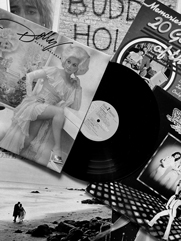
Many in the Black community adored late country legend Dolly Parton.
“And of course Black lives matter. Do we think our little White a$$e$ are the only ones that matter? No.”
Statements like that are why country legend Dolly Parton always mattered to many in the Black community.
And that empathy is why many of the Black community mourned the passing of Parton from cancer as if they had lost their favorite aunt or grandmother.
But Parton did not talk the talk when it came to the Black community; she walked the walk, making her loss even more devastating for the community.
Kristn M. Hall of the Associated Press reported, “Dolly Parton, the country music icon whose soaring vibrato vocals, poignant songwriting and sparkling costumes defined her rise from a log cabin in the Tennessee mountains to the height of stardom and acclaim, has died. She was 80 years old.
“Parton died peacefully Tuesday in Nashville, Tennessee, her publicist said…
“Known for her curvy physique, massive blonde wigs and skin-tight outfits that served her self-deprecating wit, she was among the most beloved personalities in music and beyond—the rare celebrity whose appeal transcended generations, geography and politics.”
On social media, mourners have said that Parton was one of the last celebrities that everyone liked, admired and respected.
That is not because she avoided the issues of the day.
Parton just approached the polarizing issues of the day with humanity, empathy and a care about people, even if they did not come from her demographic or background.
Furthermore, she came from an era in which many young people listened to the radio regardless of genre, or watched music video shows in which all music was highlighted.
Now, with algorithms guiding people’s music tastes, exposure to other genres becomes less of a thing.
Her hit songs included “Jolene,” “9 to 5” and “I Will Always Love You.”
But Parton was not just a vocalist; she was an esteemed songwriter and businessperson.
Therefore, when Elvis Presley wanted the publishing for recording “I Will Always Love You,” the country star declined.
Later, that song became one of the biggest hits of the 20th century when Whitney Houston covered it for the movie “The Bodyguard.”
Publishing goes to songwriters and producers, and is responsible for much of the income of musical artists.
Every time a song is played in a public place, the person or people who own the publishing gets paid.
Additionally, those who own their master recordings get paid whenever their song is used by others, including other artists sampling portions of a song.
Parton owned her master recordings from 1999 onward.
She has owned her publishing since she was in her early twenties.
Keith Murphy of Andscape wrote, “Over the years, Jazzy Jeff and the Fresh Prince, Capone-N-Noreaga, Blackalicious, and Aesop Rock have sampled Parton’s music. But perhaps the wildest genre clash is Fugees bandmember Pras’ ‘Ghetto Supastar (That Is What You Are).’ The 1998 interpolation of Parton’s breezy “Islands in the Stream,” originally a Barry Gibb co-penned duet with Kenny Rogers, featured R&B chanteuse Mya and a fever dream of a verse by the Wu-Tang Clan’s late wild man Ol’ Dirty Bastard. It’s so infectious that even the Fugees’ perpetual odd-man-out scored a top 20 single with it.”
Parton used the royalties made by Houston’s version of her classic song to buy a strip mall and office in a predominantly Black Nashville, Tenn. neighborhood.
The country music legend famously said, “This is the house that Whitney Houston built.”
When her Volunteer State brethren Three Six Mafia beat Parton and others for an Academy Award, many of Hollywood’s elite were in an uproar.
Presenter Queen Latifah even looked surprised when she melodically announced “It’s Hard Out Here for a Pimp” as the Oscar winner.
But Parton was not one of those with her panties in a bunch.
Instead, she sent Juicy J of Three Six Mafia a congratulatory letter to celebrate their monumental win.
Three Six Mafia became the first rap act to perform at the Oscars after Eminem, who had previously won the award, was a no-show at the award show because he felt that the ambience of the Oscars did not fit his image.
Parton later starred with Queen Latifah in the 2006 movie “Joyful Noise,” even appearing on BET’s “106 and Park” to promote the movie.
Queen Latifah said, “She’s just the salt of the Earth. I mean, we did a movie called ‘Joyful Noise’ together, and we had so much fun. She wrote all these songs, and she made me chicken and dumplings.”
That was part of Parton’s charm.
In an era before social media, when many celebrities seemed larger than life, Parton still seemed relatable and approachable, even though she was on the same level as the world’s biggest megastars.
While many want celebrities to stay out of politics unless their politics align with theirs, Parton was able to get away with it because it felt less like politics and more like humanity and common decency.
Many people of the modern world suffer from a lack of humanity and a lack of common decency, making the passing of people like Parton that much harder because their lives represented a simpler time.
The celebrities of the past mattered because many Americans grew up with them.
In a day before social media, celebrities often used their platforms to become the voice of the less fortunate and those unable to speak for themselves.
Therefore, the celebrities from the Baby Boomer and Generation X eras matter more than some current celebrities.
They were the people’s voice.
They were the people’s fighters.
And for that, they will always matter to people of a certain age.
